


Two opal necklaces can sit in the same display case, flash the same green-blue fire, and behave nothing alike once you put them on. A pendant gives you one stone, one setting, one clear focal point. A bead necklace gives you a line of small stones, each with its own pattern, and a very different set of daily habits. Neither is the better choice in general. The better choice depends on how you dress, how often you wear jewellery, and how much attention you are willing to give it. Here is the honest side-by-side.
Style: One Focal Point or a Line of Light
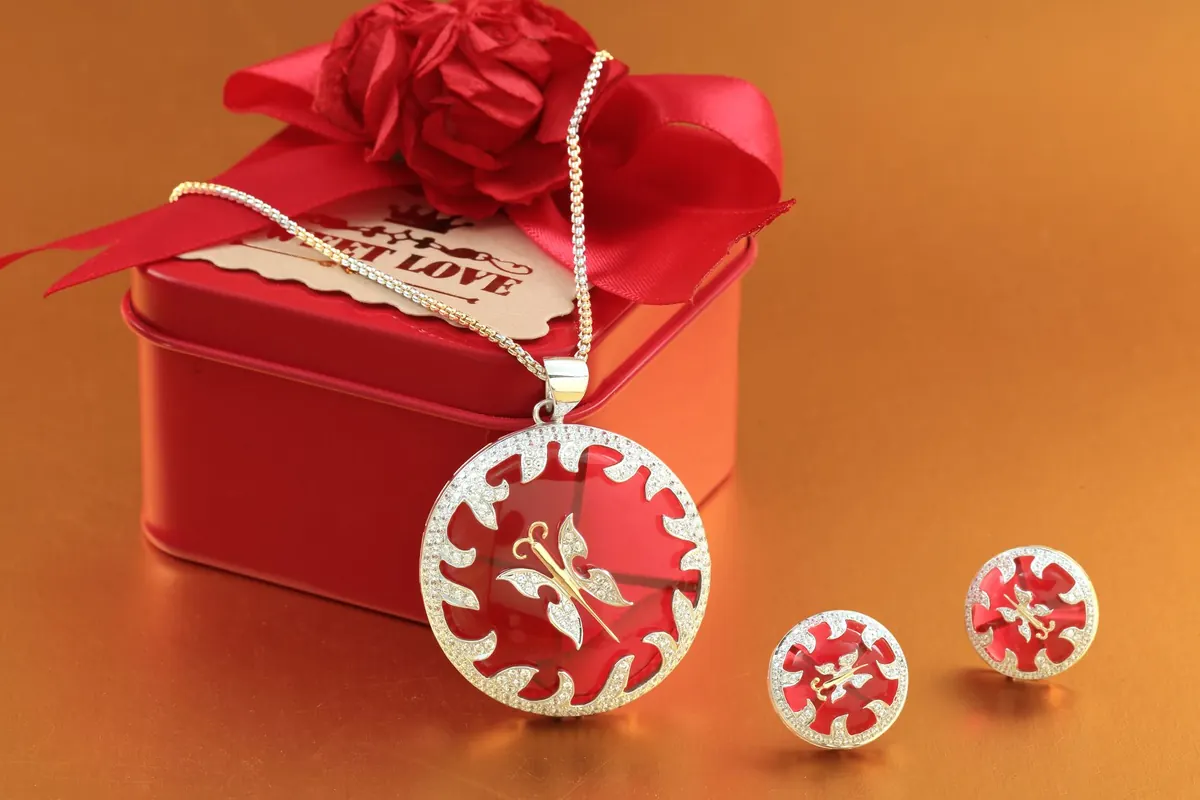
An opal pendant is an exercise in emphasis. The stone might be an oval cabochon, a teardrop, or a freeform slice, and the setting frames it so the eye lands in one place. That makes it unusually versatile. A small pendant on a fine chain reads as quiet and everyday; a larger stone in a bezel can carry a plain shirt or a wedding guest outfit without much help. It also layers well, which matters if you already wear a chain or two.
A bead necklace works by rhythm. Instead of one stone doing all the talking, you get a sequence: perhaps uniform 6 mm beads for a neat, tailored look, or a graduated strand where the centre beads are larger and the colour shifts along the line. It feels more traditional, often more artisan, and it has a presence that a pendant cannot quite match. The trade-off is that it is a piece in its own right. It usually wants a simple neckline and fewer competing accessories.
Try both against the necklines you actually wear. A pendant sits naturally in a V-neck or an open collar; a bead strand tends to look best against a scoop, a boat neck, or a plain high-neck knit. If your wardrobe is full of fussy collars and printed scarves, a single pendant will earn its keep more often.
How Each Wears Through an Ordinary Week
Opal is softer than quartz or sapphire, roughly 5.5 to 6.5 on the Mohs scale, and it deserves a little respect. On a pendant, the stone is usually protected by a metal rim or set low in a bezel. The exposed surface is limited, and the chain takes most of the knocks. On a bead necklace, every bead is exposed on all sides. Beads rub against each other, catch on clothing, and meet tabletops when you lean forward. The drill holes are small weak points, and the string or wire inside them is doing quiet, constant work.
That does not make bead necklaces fragile. It makes them a different kind of commitment. A well-knotted strand on silk, with a knot between each bead, is a robust and repairable piece. The knots stop one broken bead from scattering the rest. A wire-strung strand is stronger in some ways but less forgiving if a crimp fails. Either way, the clasp and the string are the parts that age first, not the opals.
For daily wear, a pendant is usually the lower-maintenance option, but only if the setting is well made. Check that prongs are not sharp or snagging, that the bail moves freely, and that the chain is strong enough for the stone. A heavy pendant on a hair-fine chain is a repair waiting to happen.
Care Rules That Actually Matter
Most opal damage comes from two things: impact and sudden change. Knocks can chip a soft edge, and heat or dryness can stress a stone that contains water. Chemicals are the third culprit. Perfume, hairspray, sunscreen, and household cleaners can dull a surface or seep behind a setting.
- Put jewellery on last and take it off first. Let perfume and hairspray dry before the opal goes near them.
- Skip ultrasonic and steam cleaners. They are too aggressive for opal, and they can loosen the glue in doublets and triplets.
- Use a soft, slightly damp cloth for routine cleaning. For a deeper clean, ask a jeweller rather than soaking the piece at home.
- Never soak assembled opals or hydrophane opals. Some opals absorb water and change appearance; glued layers can lift.
- Store pieces separately in a soft pouch or a lined box, away from harder jewellery that could scratch them.
- Lay bead strands flat. Hanging them stretches the string over time. Check the knots and clasp every few months, and have the strand restrung when the string looks frayed or the beads start to sit loosely.
For a pendant, add one habit: check the setting every so often. A stone that moves in its setting needs a jeweller, not a dab of household glue.
Budget: Where the Money Goes
A pendant concentrates your budget. Most of the cost sits in one stone, with the rest going to the setting and chain. That can be efficient: a beautiful opal in a simple bezel often looks more expensive than it is, because there is nothing else competing for attention. If you fall for a stone with vivid play-of-colour, you will feel the difference in the price, but you are paying for one clear feature rather than many.
A bead necklace spreads the budget across dozens of stones, plus the labour of matching, drilling, and stringing them. Small uniform beads can be quite affordable; a graduated strand with well-matched colour and pattern is a different proposition, because matching opals is slow work. Ask what the beads actually are. Solid opal beads, assembled stones, treated material, and synthetic opal all look different under a loupe and age differently. A reputable seller will tell you which you are looking at and put it on the receipt.
If the piece is valuable to you, ask about an appraisal and insurance cover. That is a conversation for a qualified jeweller or insurer, not a guess.
Trying Them On: Length, Neckline, and Layering
Length changes a necklace more than most buyers expect. A pendant on a 40–45 cm chain sits near the collarbone and feels neat and modern; drop it to 50–55 cm and it becomes more relaxed and easier to wear over knits. Hold the chain against your neck and check where the stone lands before you commit.
Bead strands have their own geography. A 40–45 cm strand sits close to the throat and suits open collars; 45–50 cm is the classic everyday length; 50–60 cm reads more formal or bohemian depending on the beads. Try the strand on with the outfit you wear most, then move your arms and bend forward. A heavier strand will swing, and that swing is what wears the string.
Layering is where pendants win. A fine opal pendant can sit with a plain gold chain or a shorter choker without looking crowded. Bead necklaces are harder to layer well; they tend to want the stage to themselves. If you like a stack of chains, choose the pendant. If you like one piece that finishes an outfit, the beads may suit you better.
A Practical Way to Decide
Start with the life you actually live, not the jewellery you imagine wearing on a special occasion.
- Count how often you dress up in a month. If it is rare, a pendant will almost certainly be worn more.
- Look at your necklines. Open collars and V-necks favour pendants; scoop and boat necks give bead strands room.
- Be honest about care. If you dislike checking settings and restringing, choose a pendant with a protected bezel setting.
- Set a budget and decide whether you want one memorable stone or many smaller ones. Both are legitimate; they simply buy different pleasures.
- Ask the seller what the opal is, how it is set or strung, and what care it needs. Clear answers are a good sign.
Buy the necklace you will reach for on a normal Tuesday, not just the one that looks best under shop lighting. A pendant and a bead strand can both last for decades, but they ask for different habits. Choose the habits you are happy to keep.
Photo: StockSnap / Pixabay