


Two opal necklaces can hold stones of the same size, hang from the same kind of chain, and still behave completely differently on the same person. Length is usually the reason. An opal that floats just above the collarbone catches the light and pulls the eye; the same stone dropped four inches lower becomes a quiet detail tucked inside a neckline. Neither is wrong. But one of them will suit the dress you are wearing on Saturday, and the other will look like an afterthought.
What follows is a plain guide to the lengths you will find in a jeweller's case, what each one does for an outfit, and how to choose the one that makes the opal look deliberate rather than accidental.
The Standard Lengths, and Where They Land
Necklace sizes come with a shared vocabulary. These are conventions, not laws — a body is not a ruler, a heavy bail can add half an inch, and a pendant hangs lower than a bare chain of the same length — but they give you a starting point when you are shopping, comparing, or describing what you want.
- Collar — 12 to 13 inches. Sits at the base of the throat, above the collarbone. Close, deliberate, a little theatrical.
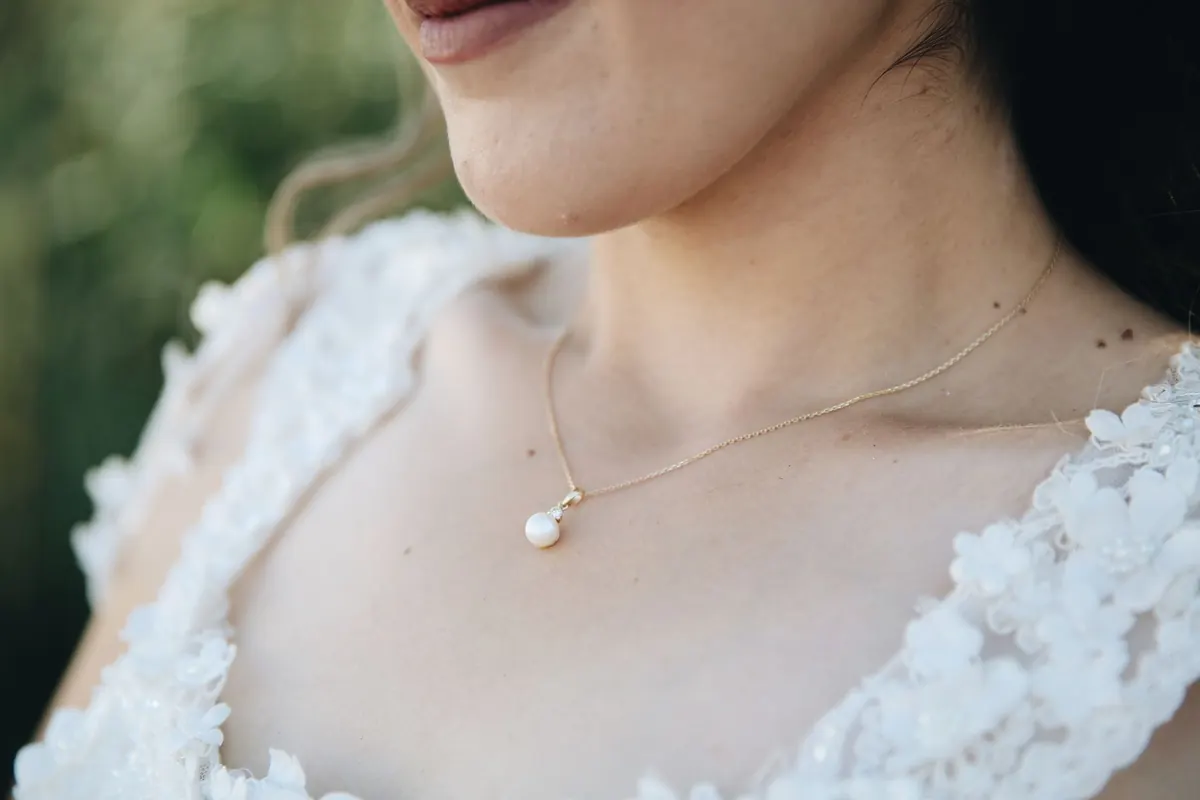
- Choker — 14 to 16 inches. Rests in the hollow of the throat or just below it.
- Princess — 17 to 19 inches. Lands on the collarbone or immediately beneath it. The most common pendant length by a wide margin.
- Matinee — 20 to 24 inches. Falls to the top of the bust.
- Opera — 26 to 34 inches. Reaches the sternum or below, depending on where you start in that range.
- Rope or lariat — 36 inches and longer. Hangs past the bust and can be doubled, knotted or belted.
To find your own numbers, cut a piece of string a little longer than you think you need, tape the ends together, and stand in front of a mirror. Move the loop until the front sits where you want the opal to sit, then measure the loop flat. Do it twice: once in the neckline you wear most, and once over a jumper. The two answers are often an inch or two apart, and that difference matters more than any chart.
Collar and Choker: 12 to 16 Inches
This is the most confident length and the least forgiving. A choker sits on bare skin, so it needs skin to sit on: strapless dresses, off-the-shoulder tops, halters, a wide boat neck. Against a high neckline it stops reading as a single necklace and starts reading as a layer, which can be lovely but is a different look.
Fit comes before style here. A collar should rest lightly against the throat. Turn your head, swallow, and lean forward — if the chain pulls or rides up, add two inches rather than living with it. A choker that is too tight makes the whole outfit look uncomfortable, because you will look uncomfortable.
For opals, small works better than large at this height. A single cabochon pendant, a slim row of graduated stones, or a fine chain with one small drop all sit neatly in the hollow of the throat. A big, heavy pendant on a short chain tips forward and turns its face away from the light, which is the one thing you never want with a stone whose whole appeal is the way it catches colour.
Princess Length: 17 to 19 Inches
If you own one opal necklace, this is probably it. The pendant lands in the small triangle of skin that appears when you unbutton a shirt collar or wear a scoop neck, and it works with almost everything: a plain crew-neck tee, a fine knit, a wedding guest dress, a blazer over a camisole.
The practical detail is clearance. With a crew neck, the opal needs to hang below the collar edge, not on it, or it disappears into the fabric. Check this while seated as well as standing; a neckline moves when you do. With a button-down, two buttons open is usually enough room for a 17-inch chain and a small drop.
Chain weight deserves a thought. A fine cable or box chain suits a delicate opal pendant and keeps the focus on the stone. A slightly heavier curb or a bezel setting is better for a larger cabochon, because it stops the pendant spinning on its bail every time you move. Princess length is also the easiest length to layer: a 16-inch choker above it, a 20-inch chain below, and you have depth without clutter.
Matinee and Opera: 20 to 34 Inches
These lengths change the shape of an outfit. Anything from 20 to 24 inches falls to the top of the bust; from 26 to 34 it reaches the sternum and beyond. Both are happiest over fabric — a turtleneck, a shirtdress, a fine merino crew, a blazer — where they draw a long vertical line and open up a high or closed neckline that might otherwise look buttoned-up.
On a low-cut dress, measure before you commit. A matinee can land awkwardly in the middle of a décolletage, and a long opera strand can vanish into a deep V. Hold the string where the chain would sit and look at it from a few paces back, not from six inches away.
Let the stone decide
An opal with strong play-of-colour needs light, and length changes how much it gets. Long chains swing as you walk, which produces lovely flashes — and also means the pendant spends time facing sideways. If the stone is large and the chain very fine, it will flip. Choose a chain with a little more presence, or a setting that holds the face of the stone forward, and the necklace will behave.
Rope and Lariat: 36 Inches and Beyond
A long strand is the most versatile piece in the box, provided you actually use it. Doubled around the neck, a rope gives you a two-strand look from a single necklace. Knotted at the collarbone, it becomes a choker with a long tail. Belted over a dress or a tunic, it turns into part of the silhouette. In winter it sits over knitwear, which is where opals look their best against wool, cashmere and tweed.
A lariat works differently: two uneven ends, with the opal finishing one of them. The open ends move freely, so the stone travels as you do. It is a relaxed, slightly bohemian shape, and it suits a plain column dress or a shirt far better than anything fussy.
One caution. Long chains catch — on bag straps, chair backs, scarf fibres, door handles. Opal is a comparatively soft stone, softer than quartz, and it does not enjoy knocks. Keep long opal strands away from rough tweed and open clasps, check the string or wire on a beaded rope now and then, and store the piece flat rather than hanging, so the thread is not carrying weight for months.
Matching Length to Neckline
A quick reference for the moments when you are standing in front of a mirror with two chains in your hand:
- V-neck: princess or matinee, letting the pendant follow the point of the V. A slim choker can work; a wide band tends to cut the V short.
- Scoop or round neck: princess, every time. The curve and the pendant echo each other.
- Crew and boat neck: matinee or opera over the fabric. If you want a short pendant, make sure it clears the collar edge.
- Square neck: princess or matinee, echoing the corners rather than fighting them.
- Strapless, off-shoulder, halter: choker or collar. Bare skin is the whole point.
- Turtleneck and mock neck: opera or rope outside the knit; a choker over the fabric if you like a layered, slightly vintage look.
- Shirt collar: unbutton two and drop a princess pendant into the opening.
Then apply the one rule that overrides all the others: one focal point. If the dress has a busy print, a beaded bodice or an embellished collar, a simple long chain is calmer and kinder to the opal. If the outfit is plain, the necklace can be the event.
Before You Choose: A Short Checklist
None of this takes long, and all of it saves a return.
- Put on the neckline you plan to wear. Standing in a plain top tells you very little.
- Measure a chain you already like and that sits where you want this one to sit. That number is your target.
- Decide where the opal should land — hollow of the throat, collarbone, top of the bust, sternum — and work back from there.
- Sit down, lean forward, and reach across the table. A necklace that only works while you are standing still will not get worn.
- Buy with room to adjust. Two inches of extender chain turns a good length into a nearly universal one, and it is the cheapest insurance in jewellery.
If the necklace is a gift and you are unsure of the neckline, princess length with an extender covers the most ground. If it is for yourself, start with the outfit you wear most often and see where the chain falls against it. A well-chosen length rarely gets noticed on its own. It simply makes the stone look as though it belongs exactly where it is.
Photo: Melike B / Pexels